I have a number of wooden tools, each of which consist of a long, straight pole with a shorter piece of wood attached to the one end, at right angle to the long pole. The short pieces of each of these tools have one or more holes bored into them. The long poles of these tools range from just under four feet, to just over seven feet in length.
On a post a while back, I reminisced on my family undertaking the butchering of pigs when I was young. In that post I noted that they often would combine the making of apple butter with the butchering. The wooden tools that I am displaying here were used in the making of apple butter.

To make apple butter, you didn't make a quart at a time; you made gallons at a time. And because you made gallons at a time, it took a number of people to work at it. As noted in the previous post about pig butchering, all the families in the hollow joined in ~ that meant my parents, grandparents and aunts and uncles (because it was only relatives who comprised the families in our little corner of the world). Since it took two or three strong-backed men to suspend our large (forty gallon) iron kettle from a wooden pole tripod and two or three equally strong-backed women to fill the large iron kettle with water, it was best done when everyone was gathered to butcher the pigs than to call them in on another day. While some members of the family were doing the grunt work of getting the kettle hung and filled with water, and making a roaring fire underneath it, others busied themselves with peeling and coring ten or twelve bushels of apples and then chopping them into quarters. I can remember a time or two, as a young boy, being allowed to carry and dump the apple segments into the kettle. (I remember also stealing a bite or two of the apples on the way to the kettle.)
Did I mention that there would be a roaring fire under the kettle?
You had to boil the cut up apples, along with sugar and some cinnamon, in the water in order for their pulp to caramelize and turn into a thick, sticky 'butter'. The mixture in the kettle had to be stirred almost constantly for up to six or eight hours to prevent any of the apple mash from settling to the bottom of the kettle, where it might burn. So how do you stir the contents of a large iron kettle over a long period of time with the heat of a fire emanating from it? The answer is the object of this post ~ a stirring stick at the end of a long pole.
The finished apple butter would be spooned out of the kettle and deposited in glass jars. Each family took a couple jars, and enjoyed the tart, apple flavored jam through the following winter.

Everybody seems to be upping these days. One television commercial after another has someone either upping or wanting to up. And if you personally have not upped recently, then you must be in a deep coma or dead ~ because everyone seems to be upping or wanting to up.
Well, I am here to state that I dislike the new verb that's being trumpeted left and right, just about everywhere you turn: to up. While I was growing up, we never upped anything. We might increase this or that, but we never upped this or that. We never planned to up our knowledge of anything, but we might enlarge or enhance our knowledge. And we most assuredly did not up our game, although we might try to become better at what we did.
It seems that only recently, i.e. over the past five years or so, the verb form of the word up has been used so extensively. For the first half a century or so of my life I never heard anyone using the word up as a verb. As I mentioned above, nowadays it seems that hardly a day passes that you don't hear the word up being used as a verb by someone in the news media, on a television or radio commercial, or on a website. For a number of years I endured working for a boss who felt that he had to abbreviate words. My boss's boss told him that his reports were "too wordy", and that he needed to reduce them somewhat. Instead of realizing that his boss meant that he should condense his thoughts into smaller, more concise sentences, my boss thought that he should cut down the words themselves. So, instead of writing out the word through, my boss would write thru. Instead of approximately, my boss would write apxx. My boss's paragraphs still contained two hundred sentences and his sentences still contained eighty to one hundred words, but most of his words contained 20% less letters. I disliked my boss's misguided attempt to follow his boss's directive. So when my senses began to be bombarded with one person upping this and another person upping that, instead of the first simply increasing this and the latter intensifying that, I found myself disliking it more and more.
Now, although the use of the word up as a verb has, in recent years, upped tremendously, such usage is not new. A check of the Oxford English Dictionary reveals that there are actually seven senses of the use of the word up as a verb. The earliest evidence of the usage of the word as a verb can be found circa 1560-1. According to the Oxford English Dictionary, the first sense of the word as a verb was to drive up and catch, and it was illustrated: "For uppyng the ground byrde in porte meade." In 1584-5, the Order For Swans directed that "The Swan-heard...shall vp no Swan nor make any sale of them, without the Maister of the Swannes...be present." The second sense of the word as a verb was to make up, form or compose and was illustrated by the 1658: "And Animal together blow'd and made. And up'd of all the shreds of every Trade." The third sense of the word as a verb was to raise up (a weapon, etc.) esp, to or upon the shoulder. This third sense was illustrated by the 1887 "She ups her stick and begins to belabour him across the shoulders." The fourth sense of the word as a verb was a nautical term meaning to heave or haul. The fifth sense of the word as a verb was noted as a term used in card-playing: to raise (a bid, stake, etc.). The sixth sense of the word as a verb was to rise to one's feet; to get up from a sitting or recumbent posture, as illustrated by the 1643 "The true-bred Gamester ups a fresh, and then, Falls to 't agen." The seventh, and last, sense of the word as a verb was to move upwards, to arise or ascend as illustrated by the 1737 "A chimney-sweeper ups and downs it in a Chimney, with his long broom."
Who am I to argue with a word usage dating back to at least the 1560s? I guess I'll up my knowledge . . . that is, after I up from my chair to get something to eat.
My aunt Margaret Ann Noffsker, my mother, Dollie's next older sister in her family of ten, was a character. She chose not to marry and spent her life working and doing things for and with many other friends. In the small town of East Freedom, Pennsylvania, Ann Noffsker was a very popular person. Everyone seemed to know Ann, and Ann seemed to know everyone. That's what made Ann such a 'character'. She was always in the thick of things, and an advocate of anything that was popular. At times Ann seemed to be larger than life.
It was my aunt Ann whom I first heard speak the words "all get out" ~ in sentences such as: "It's colder than all get out" or "That crash was louder than all get out." It was also my aunt Ann whom I first heard utter the phrase "Oh my aching tonsil". That one was usually uttered when she would be amazed or when she wanted to express to you that what you just said, or did, pushed her to the limit of which she could fathom. This phrase might be connected to the former as Ann would exclaim: "Oh my aching tonsil, that yellow is brighter than all get out!"
A check of the phrase on the Internet revealed that the phrase 'all get out' was, and continues to be, popular especially in the Appalachian region of the eastern United States of America. (East Freedom is in Appalachia, so that part fits.) Some sites presented the assumption that the phrase literally implied 'getting out' of, or from, something. But the way that the phrase was, and still is, used by people such as my aunt Ann, tend(ed) to embrace the impression of a superlative, meaning that it expresses something bigger or greater than anything else.
So remembering my aunt Ann saying: "It's colder than all get out!", I realize that I loved her more than all get out.

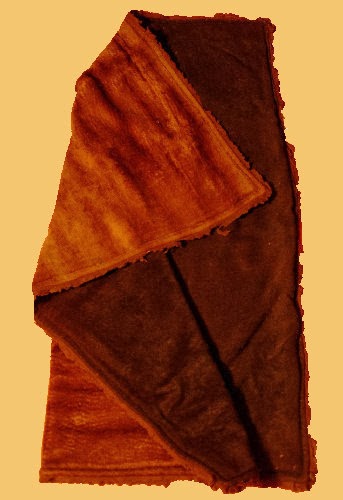
I was visiting a local antique emporium this past weekend and came upon another example of someone selling an item of which they knew nothing about. On a table was a beautiful (in the eye of the beholder) piece of fabric that was titled a "horse blanket". The implication of the title was that the item was a blanket placed over the back of a horse that had been ridden hard and was sweated wet, needing to be dried off. The only problem was that the blanket was made of horse hair, which would not have served very well to dry off a wet horse. What the slightly ignorant (in regard to knowledge) antique dealer did not know was that the item should have been titled a "horsehair blanket".
Horsehair is seldom used today, but at one time it was a material used in a number of ways. The most common use for horse hair was in house plaster. The plaster used in houses during the 1800s and early 1900s was composed primarily of lime and sand, such as marble dust, with some sort of strengthening agent. A very common strengthening agent was horse hair. Horsehair was also used in furniture upholstery; the hair, being springy, allowed upholstery to maintain comfortable shape for a long time.
When winter time came around, another use for horse hair became evident ~ to make sleigh blankets considerably warmer and water resistant.
The photo at the top of this post is of a horsehair blanket. It measures a mere four feet, five inches in width and five feet in length. The blanket's two faces are composed of different materials: the top, or front, is composed of horsehair woven with wool, and the bottom, or back, is composed just of wool. Between the two faces, like the cotton batting in a bed quilt, is a batting made of sawdust or straw.

A horsehair blanket, despite its small size, tends to be quite heavy. The weight of the blanket was intentional. After being seated on a sleigh, or in an open front carriage, the riders would lay the horsehair blanket over their laps. The weight of the blanket kept it from blowing off the riders' laps as the sleigh was in movement. Before placing the blanket over their laps, a foot-warmer, holding glowing coals, might be placed at the riders' feet. (For those of you who have been following this blog, you might remember that this was noted in the post of 26 June, titled: Who's Got Cold Feet? ~ Not Me!)
Some horsehair blankets are brightly colored (the colors being dyed in the wool prior to weaving), whereas others, such as the one shown here, are left in their natural colors. Designs, such as the alternating light and dark blocks in this example, would have been devised and produced in the process of weaving it.

Oh, and one last thing . . . you certainly would not want to cover up with one of these horsehair blankets and fall asleep. As heavy and warm as they tend to be, you'd awaken quite sweated ~ you'd probably feel like a horse that had been ridden hard and put away wet.

Wait a moment. That isn't a girl ~ the hair is cut too short to be a girl. But she does have a dress on, doesn't she?
Actually, the child standing alone in front of a black curtain was my father, Bernard. He was born in the year 1919 in the Nofsker house that stands across the valley from my current home. His maternal grandfather, Aaron Bowser, share-cropped for a living. He and his wife, Linnie, would live in with a family while he did work for them, and then when he found a new family that needed work done, they would move on and take up living quarters with the new family. Aaron was known for repairing fences and might take up residence with a family while he repaired the fences around their farms. At the time that my father was born, his mother, Jennie was staying with Aaron and Linnie while he share-cropped for Lecky Nofsker. And that is why my father was born in the house across the valley.
The photo that appears at the top of this post would probably have been taken circa 1921, when my father was two years old, maybe three. And that is indeed what he normally wore at that age. All children, whether boy or girl, wore the type of garment in which my father was photographed. He once told me that families dressed their children in this type of garment until they reached the age of five or six. When they started attending school, the boys began wearing pants, in the form of knickers, and a shirt.
The garment my father was wearing at the time he was photographed was actually a type of shirt or blouse. The length of the shirt, and the fact that no pants are evident, is what makes the garment appear to be a dress.

Little girls wore the same type of shirt as a dress, but of course in the early 1920s, the little girls did not start to wear pants when they began to attend school.
The photograph to the right shows my father at about the age of four. Notice the way the collar hangs down over the back. It's almost identical to the collar on the garment in the earlier picture. The fact of the matter is that my father might have been wearing the same type of shirt in both pictures. After he started wearing pants, the long tail of the shirt would simply have been tucked inside the pants.
The two additional photos below display one of my father's shirts, with a detail of the collar, which was made by a sort of tatting. The material of which this shirt was made appears to be a cotton muslin. The photos are very close to the actual color of the item.

In Latin there was a word that stood for 'a winnowing tool' or 'whip'. It was flagellum (which was, itself, a diminutive, or more concise, form of the word: flagrum: 'to whip'). Some sources give the origin of the Latin as a Proto-Indo-European word: bhlag, which signified 'to beat'. The people of the northern Europe region who spoke Old High German converted the Latin word into its own: flegel. The people who spoke Low German or Middle Dutch contrived the word: vlegel. Old English used the Old High German form of flegel with a slight variation to become flighel or fligel. In the Middle English, the word was written as fleil, while the Anglo-French spelled the word flael. While the word, with its meaning of a tool for beating or winnowing of grain, came into use by the year 1100, the modern usage of the spelling flail was derived from its earlier sources around the 15th Century.
The flail was a tool used to separate useful grain seeds from husks and other unusable parts of the wheat or rye plant. (Corn, in some cases, might also be threshed to remove the kernels from the cobs.) The tool consists of a long wood pole or staff, called the hand-staff, a shorter wood pole, called the swingle (variously, the sweple, swiple or supple), and a strip of leather or hemp rope connecting the two poles. The wood most commonly used for the parts of the flail was holly. Holly is fine-grained and not easily broken; it made the ideal material for the flail, which took a lot of beating. The hand-staff is aptly named because the user, known as a thresher, would grasp, with both hands, the longer of the two wood poles. The swingle (which was derived from the Old English: swingan, meaning 'to strike' or 'beat') would hang freely from the one end of the hand-staff, called its 'head'.

The flexible connection between the two poles being the leather strip or hemp rope, the swingle could be swung in any direction.
The job of threshing was performed on a dirt floor in a barn. Wooden floors, no matter how well constructed, would have enough cracks between the planks to lose a substantial amount of the grain. The dirt floor would be prepared by being swept clean. A dirt floor of the barn would have, over time, become very tightly packed, and therefore could be 'swept clean' of loosed dirt, rocks and stray items. After sweeping the floor, the thresher would sprinkle it with water just to make it all the more free of any loose dust. A quantity of straw (i.e. the harvested and dried grain plant, whether wheat or rye) would be piled onto the center of the floor. If there were more than one thresher, they would position themselves around the strawpile. The thresher would use an up and down motion to slap the swingle down and onto the pile of straw. Rather, the thresher simply moved the hand-staff so that it's head alternated being raised up and then directed back down to the floor. The swingle could not help but be slapped down flat against the pile of grain-bearing straw. The continual striking of the flail's swingle would force the grain kernels to be knocked out of the heads of the straw. The action did not squeeze out the grain, but instead shook it out (keeping the grain intact and not crushed). An astute farmer would build his barn with threshing in mind. That means that doors would be placed on opposite sides; those sides being against the direction of the wind. As the wind blew through the barn, it would whisk the bits of husk, broken up and aggravated by the threshing activity, away from the central pile.
The photos attached to this post show a flail from the 1800s.

My maternal grandmother, Bertha Mae Nofsker, was commonly known as Grammy Nofsker. I use the word 'commonly' as an adverb to describe the verb phrase: 'was known as' not in the sense of something that is simple, uniform or ordinary, but rather in the sense of something that is entirely, totally or universally. You see, I called my grandmother: Grammy, and my cousins called her: Grammy. But everyone who lived in the valley created by the South Dry Run creek also called her: Grammy ~ whether they were related to her or not. There are non-relatives who attend the church in which she was an early, prominent member who talk about Grammy Nofsker even to this day, nearly fifty years after her death.
The picture above was taken when Bertha was in her late teens. That's her on the left, with her best friend Emma.
Grammy was a tough old lady in the last years of her life (that is, when I knew her, up to when I reached eight years old). And I imagine she was a tough young lady long before I ever knew her. Bertha's life had always been tough. She had been born out of wedlock. Her birth grandmother (a Shoop) came to live with her birth grandfather (a Boyer) ~ each was widowed at the time ~ and they apparently never married each other. Bertha's mother, Ann Boyer, just in her late teens, suddenly had a new house-mate, Richard Shoop, also in his late teens. One thing, as they say, led to another, and on 31 October 1884, a baby girl was born. Richard never married Ann. Perhaps both separate families ~ the Boyers and the Shoops ~ were embarrassed by what had happened. In any case, Ann raised her child by herself. Oh, did I forget to mention that Ann already had given birth to a boy before the Shoops moved in with her family? The boy, Albert Weyandt, was three and a half years old when Bertha came along. He only lived to the age of four. When Bertha was about three years old, Ann married Daniel Earnest, and he filed formal adoption papers to share legal custody of the child with his new wife.
So I guess you could say that there was a happy ending to the turmoil that defined Bertha's childhood ~ right? No, that wasn't to be the case. In fact, when Daniel Earnest adopted Bertha, it was probably the start of a tougher period in her life. You see, Dan Earnest never really accepted Bertha as a daughter. Daniel and Ann gave birth to two boys and two girls during the ten year period from 1887 to 1897. And while he doted on the two girls, Kathleen and Annie Mary, he made Bertha work with the hired farmhands in the barn. It was as if the story, Cinderella, had been written with the Earnest family in mind. And, one thing, as they say, led to another, and at the age of fifteen, Bertha gave birth to a son; the baby boy's father was one of the negro hired hands. The family always claimed, whether it was true or not, that Grammy had been raped ~ we'll never know for sure. But what we do know is that Daniel Earnest never accepted the child of his adopted daughter, even to the extent that he had accepted her. A US Census return taken in the year 1900, included the Daniel Earnest family. The return listed Bertha Shoop as 'step-daughter' and Dewey Shoop as 'step-grandson'. Daniel, who probably was the one who gave the census-taker his family's information, could just as easily have given Bertha's name as 'Bertha Earnest', and he could have listed her as 'daughter' ~ he had legally adopted her twelve years earlier ~ but he chose to alienate her and her newborn son.
Bertha grew up, married Henry Martin Cleveland Nofsker, and gave birth to ten children. But when their youngest child, my mother, Dollie, was only four years old, Cleveland died. What was Bertha to do? What could she do, but go on with her life, run her farm and raise her family of ten children.

Of course the older kids helped with the younger siblings. But life still would have been tough for Grammy. My mother told me tales of how Grammy had broken an arm when she fell off the haywagon as they were doing their autumn chores; she suffered from arthritis in that arm ever after. The photo to the left shows Grammy with her next to youngest daughter, Margaret Ann. They look like they're in their 'Sunday-best' dresses.
So what really is this post supposed to be about? The title says "Grammy's Apron", but nothing at all has been said about any apron. All the biographical information that was given above was for the purpose of showing how my maternal grandmother came to be a tough old lady. But that was not what I, and perhaps most people around her, saw day after day. What I saw was a loving, compassionate face, welcoming, sheltering arms, and a lap into which I could curl when I was sad ~ and her apron. For sure, I remember seeing Grammy dressed in her Sunday-best dresses, that is, on Sunday. But the rest of the time, my image of Grammy was of her in an 'everyday' dress with a gingham, striped or checkered apron.
All the older women in our neighborhood wore aprons over their everyday dresses. And they were definitely dresses ~ women did not wear slacks, trousers or pants at that time. The aprons covered the entire front of the women. Beginning at the neckline, a strip of cloth wrapped around the neck and supported a 'bib' that covered the woman's bosom. The bib was attached at its bottom to the top of a wider piece of cloth that extended from the waist down to below the knee. In the 1960s, when I remember Grammy, women's everyday dresses's hemlines were mid-calf length. The apron was nearly long enough to cover the entire length of the dress. At the waistline, two strips of cloth were pulled around to the back to be tied in a large bow, or if they were long enough, to be pulled on around to the front to be tied there.
Then there were the pockets. I think the pockets were what made the apron so wonderful. The part of the apron called the bib might hold one or two side-by-side pockets. Then there would be that one giant pocket at the waistline, or there might be two medium-size pockets at the waistline and one larger pocket along the bottom of the apron. But even if an apron did not have sewn-in pockets, a woman could transform her apron into a pocket simply by grabbing the two lower corners of material and pulling them upward.
The pockets on Grammy's apron were a treasure trove for a seven year old boy. Sometimes they held a spool of thread with a needle stuck into it and maybe a pair of small shears. Sometimes there would be a book or a pencil in one of the pockets. Often there were a few coins and a fancy piece of jewelry, such as a brooch. The pockets of Grammy's apron was sometimes used by my brother and me to stash our own treasures. If we were out taking a walk and found an interesting colored stone, we'd run to Grammy and she'd hold one of the pockets open so we could drop the treasure into it. I can also remember when Grammy took us along to gather cherries, she would grab the bottom corners of the apron and pull them upward to create a large pocket into which Leon and I would deposit the cherries we picked. I also remember Grammy grasping the bottom of her apron and wiping it over my face and head when I was either dirty or sweated from running and playing.

The photo above is the only one I have that shows Grammy with her apron on; when a photo was taken, Grammy, like anyone else, wanted to be seen in her best clothes. This photo, though, was one of the few that were taken somewhat spontaneously, while she was feeding the chickens. I think it was Grammy's apron that softened her toughness for me. It's a shame that women no longer use them.