My father, Bernard Smith, was very knowledgeable about many things. He could quote passages from Shakespeare and other authors; and he could discuss (intelligently) theological matters with the best of theologians. More than a few times I witnessed my father doing mathematical calculations in his head. He encouraged my own interest in biology and, at a very young age, dinosaurs. Of course I adored him and believed, as most kids probably do of their own fathers, that he knew Everything (that's everything with a capital "E"). Always possessing a keen sense of humor, he would tell me and my siblings that if I ever had a question about something, all I had to do was to ask it. If he didn't know the correct answer he would respond: "That was a very good question, why don't you ask me another?"
Despite all of the things that my father knew, one thing stumped him ~ the idiot bush. The idiot bush suddenly appeared one summer in our yard ~ not among the other wild bushes that covered the hillside behind the house ~ not along the creek ~ not out of the way anywhere, but smack dab in the open space of the yard. Okay, so it wasn't in the front yard, but in the portion of yard that bordered the garage, so it was kinda out of the way. Maybe that is why my father didn't immediately mow it down. It really didn't bother anyone. It just was there. And boy did it grow!
The bush was almost six feet tall by the end of the summer, with seven or eight long, slender 'branches' sprouting upward from the base of the primary one. Suddenly there was another, similar bush, growing just three feet away from the first. Although there were now two distinct bushes, we always referred to them as 'the idiot bush'.
My brother and I were warned not to cut down the idiot bush, so when we mowed the yard we had to work around the two space-grabbers. Every time that I mowed the yard, and had to dodge the arching branches, I muttered a word or two of disapproval. In those days when I mowed with a push mower, I preferred simple yards ~ yards that required only a few swipes, straight up and down, without being slowed down by trees or bushes. So suddenly there were two bushes standing in the middle of the very yard that I preferred to mow in a few swipes, straight up and down.
Why did my dad name the bushes that suddenly appeared in our yard: the idiot bush? Probably because it was one of those few things that he did not know the answer to. And I'm sure if we would have asked him why he named them that, he probably would have responded: "That's a very good question; now do you have any others?"
My father passed away thirteen years ago. The idiot bush (both of them) had to be cut down when I constructed my house and needed to use that portion of the yard for my septic drainage field. But that wasn't the end of the idiot bush; over the years I watched them sprouting just about everywhere. They grew on the hillside, along the creek, and by the side of most of the roads on which I drove my car.
Times change. Instead of being able to ask my knowledgeable father questions about things like "What kind of bush was that?", I now have to find the answers elsewhere. So I searched on the internet and discovered the true name of our idiot bush: Japanese Honeysuckle.
The photos on this post are of the Japanese Honeysuckle (Lonicera japonica). The United States Department of Agriculture has listed the Japanese Honeysuckle as an invasive weed. That's a shame, because the delicate flowers that cover the bush are very beautiful. Depending on the type of soil, some of the plants bear white flowers with yellow stamens, while others bear pink or even purple flowers. On my property, the plants that grow along the creek tend to bloom with white flowers, while the ones that grow along the slate outcropping of the hillside tend to bloom in a beautiful pinkish purple.

The flowers of the Japanese Honeysuckle have a fragrance similar to vanilla. According to many sources, the plant produces many berries that ripen from green to black; all of the bushes in my area produce red berries that don't change color before falling from the plant. The plant spreads rapidly. The plant is considered a vine because it will intertwine itself with trees or other structures in which it comes in contact. Because of their capacity to grow anywhere, in good or bad soil alike, and because they propagate by either rhizomes underground, runners aboveground, and/or seeds, they tend to grow right where you don't want them and are large bushes before you know it.
I'm older now than my father was when he christened the honeysuckle plant as: the idiot bush. I think of Bernard Smith everytime I see the idiot bushes blooming.
You might think that you're a real sociable person. You have 327 'friends' on Facebook (a dozen or so of whom you have actually met in person), and you honestly believe that your Twitter followers really care where you went last weekend. And so, as you sit in front of your computer or with your android tablet or phone in hand, tapping out your tweets and posts, you are convinced that you are connecting with others. The fact of the matter is that despite all the advances in technology, and irregardless of all the gizmos and doodads we have on our phones, we human beings are becoming less and less truly sociable.
Years ago, unlike during the present age, people were genuinely sociable. They met and interacted with each other in physical reality ~ not just in virtual reality. Many human beings engaged in an archaic ritual that was known as 'visiting' ~ travelling to another person's house and talking to that person - in person. I know that it might sound unusual to some readers, but people actually did that at one time.
The object of this post is an ephemeral relic of that sociable ritual of 'visiting' ~ the calling card (often referred to as the visiting card).
Back then, in that genteel age named for Britain's Queen Victoria, of the House of Hanover, there existed what was known as polite society. Gentlemen opened doors for ladies and assisted them in being seated at the dinner table. In return, ladies said "thank you", instead of calling the men 'sexist pigs'. Friends and associates met at parties for the purpose of enjoying each other's company ~ not just to get drunk and pass out. Men, and women alike, used their fingers to grasp things, not to convey bad thoughts toward one another.
Arising out of the air of politeness that imbued mankind's social interactions was the announcement of the arrival of visitors at parties, other social events, or just on a summer evening. And that is where the calling card came into use.
It is claimed by some sources that calling cards came into general use in China as early as the Fifteenth Century. Within two hundred years, they were in vogue throughout Europe. The cards were quite popular in Great Britain and the United States of America from the Georgian to the Victorian eras.
Despite eventually becoming popular with the middle and lower classes, as anything in vogue tends to do, the calling card's use, originally, was confined to the aristocratic level of society.
It was not just from a desire for exclusivity; the etiquette of the calling cards required that there be servants to make them function properly. A person who wished to visit the home of another would present his card to the maid or doorman of the intended party, and then either wait there, or return home to wait, for a response. The gentleman's address might be written on the back of the card if the lady he wished to visit was not already an acquaintance. If given an approval, by the receipt of the other party's card, the intended visitor would present himself at her door once again, and he would then be admitted.

Oh, and I wasn't being sexist a sentence or two ago when I stated that a "gentleman" would present "his" card... In polite society, a woman did not make such a bold move, unless she wanted to be labeled a 'tart' or something worse. The ritual was only completed if and when the lady instructed her servant to hand-carry one of her own cards to the gentleman. If she failed to do this, or mailed his own card back to him in an envelope via the postal service, it was a sign to him that she did not wish to have his company.
Similar to the present-day business card, calling cards were printed on heavy card stock and were generally under two inches by four inches. A common size was one and one-half by three inches. Initially, calling cards were white, with the person's name printed in black ink, such as the one given out by Hannah A. Burger, and shown at the beginning of this post. The name might be printed in a standard font, such as Times New Roman, but in italics for effect, or it might be fancied up by employing a script font.
As shown in the examples illustrating this post, sometimes the initial letters were printed in a different, more elaborate font for emphasis. Some individuals wanted more extravagant cards, and to that end they paid the printer extra to fill the empty space around their names with images of flower bouquets, animals or, as shown in one example above (that of Hezekiah Cobler), the card owner's own likeness. It should be noted that Miss Cobler also gave out cards with only her name on them ~ I wonder how she decided to whom the picture ones should be given?

In the examples shown here, the two full scenes (of the boy coaxing the lobster, and the puppy with a ribbon) are unique. The card of Harry Reininger includes a scene in which a boat sails past three palm trees along the shore. Perhaps he had visited a South Seas island at one time and longed to return there, or perhaps it was just a dream of his to someday sail past a beach lined with palm trees. The images on the cards undoubtedly revealed something of the person's character.
The card of Cora M. Walter is unique in this collection, because it contains not only a scene in addition to her name, but also an inspirational poem.
Also, quite unique, is the card pictured below, which has an overlay of a hand holding a rose, from which a child, or perhaps a cherub, is emerging. The overlay lifts upwards to reveal Catharine Grabill's name. The purpose of the semi-circular cutouts is unknown; perhaps they were included simply as a design element.

The last card exhibited here is the business card of D. Miles Walter, who advertised to print a pack of visiting cards for only 10 cents for forty of the nicest cards ever brought before the people.
I have a number of wooden tools, each of which consist of a long, straight pole with a shorter piece of wood attached to the one end, at right angle to the long pole. The short pieces of each of these tools have one or more holes bored into them. The long poles of these tools range from just under four feet, to just over seven feet in length.
On a post a while back, I reminisced on my family undertaking the butchering of pigs when I was young. In that post I noted that they often would combine the making of apple butter with the butchering. The wooden tools that I am displaying here were used in the making of apple butter.

To make apple butter, you didn't make a quart at a time; you made gallons at a time. And because you made gallons at a time, it took a number of people to work at it. As noted in the previous post about pig butchering, all the families in the hollow joined in ~ that meant my parents, grandparents and aunts and uncles (because it was only relatives who comprised the families in our little corner of the world). Since it took two or three strong-backed men to suspend our large (forty gallon) iron kettle from a wooden pole tripod and two or three equally strong-backed women to fill the large iron kettle with water, it was best done when everyone was gathered to butcher the pigs than to call them in on another day. While some members of the family were doing the grunt work of getting the kettle hung and filled with water, and making a roaring fire underneath it, others busied themselves with peeling and coring ten or twelve bushels of apples and then chopping them into quarters. I can remember a time or two, as a young boy, being allowed to carry and dump the apple segments into the kettle. (I remember also stealing a bite or two of the apples on the way to the kettle.)
Did I mention that there would be a roaring fire under the kettle?
You had to boil the cut up apples, along with sugar and some cinnamon, in the water in order for their pulp to caramelize and turn into a thick, sticky 'butter'. The mixture in the kettle had to be stirred almost constantly for up to six or eight hours to prevent any of the apple mash from settling to the bottom of the kettle, where it might burn. So how do you stir the contents of a large iron kettle over a long period of time with the heat of a fire emanating from it? The answer is the object of this post ~ a stirring stick at the end of a long pole.
The finished apple butter would be spooned out of the kettle and deposited in glass jars. Each family took a couple jars, and enjoyed the tart, apple flavored jam through the following winter.

Everybody seems to be upping these days. One television commercial after another has someone either upping or wanting to up. And if you personally have not upped recently, then you must be in a deep coma or dead ~ because everyone seems to be upping or wanting to up.
Well, I am here to state that I dislike the new verb that's being trumpeted left and right, just about everywhere you turn: to up. While I was growing up, we never upped anything. We might increase this or that, but we never upped this or that. We never planned to up our knowledge of anything, but we might enlarge or enhance our knowledge. And we most assuredly did not up our game, although we might try to become better at what we did.
It seems that only recently, i.e. over the past five years or so, the verb form of the word up has been used so extensively. For the first half a century or so of my life I never heard anyone using the word up as a verb. As I mentioned above, nowadays it seems that hardly a day passes that you don't hear the word up being used as a verb by someone in the news media, on a television or radio commercial, or on a website. For a number of years I endured working for a boss who felt that he had to abbreviate words. My boss's boss told him that his reports were "too wordy", and that he needed to reduce them somewhat. Instead of realizing that his boss meant that he should condense his thoughts into smaller, more concise sentences, my boss thought that he should cut down the words themselves. So, instead of writing out the word through, my boss would write thru. Instead of approximately, my boss would write apxx. My boss's paragraphs still contained two hundred sentences and his sentences still contained eighty to one hundred words, but most of his words contained 20% less letters. I disliked my boss's misguided attempt to follow his boss's directive. So when my senses began to be bombarded with one person upping this and another person upping that, instead of the first simply increasing this and the latter intensifying that, I found myself disliking it more and more.
Now, although the use of the word up as a verb has, in recent years, upped tremendously, such usage is not new. A check of the Oxford English Dictionary reveals that there are actually seven senses of the use of the word up as a verb. The earliest evidence of the usage of the word as a verb can be found circa 1560-1. According to the Oxford English Dictionary, the first sense of the word as a verb was to drive up and catch, and it was illustrated: "For uppyng the ground byrde in porte meade." In 1584-5, the Order For Swans directed that "The Swan-heard...shall vp no Swan nor make any sale of them, without the Maister of the Swannes...be present." The second sense of the word as a verb was to make up, form or compose and was illustrated by the 1658: "And Animal together blow'd and made. And up'd of all the shreds of every Trade." The third sense of the word as a verb was to raise up (a weapon, etc.) esp, to or upon the shoulder. This third sense was illustrated by the 1887 "She ups her stick and begins to belabour him across the shoulders." The fourth sense of the word as a verb was a nautical term meaning to heave or haul. The fifth sense of the word as a verb was noted as a term used in card-playing: to raise (a bid, stake, etc.). The sixth sense of the word as a verb was to rise to one's feet; to get up from a sitting or recumbent posture, as illustrated by the 1643 "The true-bred Gamester ups a fresh, and then, Falls to 't agen." The seventh, and last, sense of the word as a verb was to move upwards, to arise or ascend as illustrated by the 1737 "A chimney-sweeper ups and downs it in a Chimney, with his long broom."
Who am I to argue with a word usage dating back to at least the 1560s? I guess I'll up my knowledge . . . that is, after I up from my chair to get something to eat.
My aunt Margaret Ann Noffsker, my mother, Dollie's next older sister in her family of ten, was a character. She chose not to marry and spent her life working and doing things for and with many other friends. In the small town of East Freedom, Pennsylvania, Ann Noffsker was a very popular person. Everyone seemed to know Ann, and Ann seemed to know everyone. That's what made Ann such a 'character'. She was always in the thick of things, and an advocate of anything that was popular. At times Ann seemed to be larger than life.
It was my aunt Ann whom I first heard speak the words "all get out" ~ in sentences such as: "It's colder than all get out" or "That crash was louder than all get out." It was also my aunt Ann whom I first heard utter the phrase "Oh my aching tonsil". That one was usually uttered when she would be amazed or when she wanted to express to you that what you just said, or did, pushed her to the limit of which she could fathom. This phrase might be connected to the former as Ann would exclaim: "Oh my aching tonsil, that yellow is brighter than all get out!"
A check of the phrase on the Internet revealed that the phrase 'all get out' was, and continues to be, popular especially in the Appalachian region of the eastern United States of America. (East Freedom is in Appalachia, so that part fits.) Some sites presented the assumption that the phrase literally implied 'getting out' of, or from, something. But the way that the phrase was, and still is, used by people such as my aunt Ann, tend(ed) to embrace the impression of a superlative, meaning that it expresses something bigger or greater than anything else.
So remembering my aunt Ann saying: "It's colder than all get out!", I realize that I loved her more than all get out.

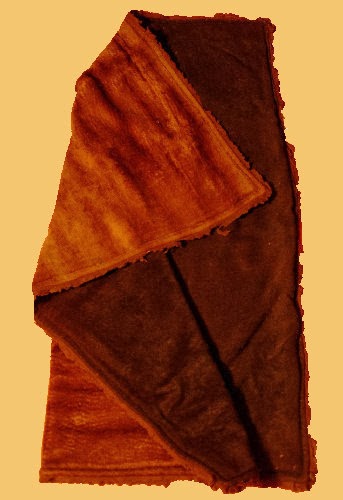
I was visiting a local antique emporium this past weekend and came upon another example of someone selling an item of which they knew nothing about. On a table was a beautiful (in the eye of the beholder) piece of fabric that was titled a "horse blanket". The implication of the title was that the item was a blanket placed over the back of a horse that had been ridden hard and was sweated wet, needing to be dried off. The only problem was that the blanket was made of horse hair, which would not have served very well to dry off a wet horse. What the slightly ignorant (in regard to knowledge) antique dealer did not know was that the item should have been titled a "horsehair blanket".
Horsehair is seldom used today, but at one time it was a material used in a number of ways. The most common use for horse hair was in house plaster. The plaster used in houses during the 1800s and early 1900s was composed primarily of lime and sand, such as marble dust, with some sort of strengthening agent. A very common strengthening agent was horse hair. Horsehair was also used in furniture upholstery; the hair, being springy, allowed upholstery to maintain comfortable shape for a long time.
When winter time came around, another use for horse hair became evident ~ to make sleigh blankets considerably warmer and water resistant.
The photo at the top of this post is of a horsehair blanket. It measures a mere four feet, five inches in width and five feet in length. The blanket's two faces are composed of different materials: the top, or front, is composed of horsehair woven with wool, and the bottom, or back, is composed just of wool. Between the two faces, like the cotton batting in a bed quilt, is a batting made of sawdust or straw.

A horsehair blanket, despite its small size, tends to be quite heavy. The weight of the blanket was intentional. After being seated on a sleigh, or in an open front carriage, the riders would lay the horsehair blanket over their laps. The weight of the blanket kept it from blowing off the riders' laps as the sleigh was in movement. Before placing the blanket over their laps, a foot-warmer, holding glowing coals, might be placed at the riders' feet. (For those of you who have been following this blog, you might remember that this was noted in the post of 26 June, titled: Who's Got Cold Feet? ~ Not Me!)
Some horsehair blankets are brightly colored (the colors being dyed in the wool prior to weaving), whereas others, such as the one shown here, are left in their natural colors. Designs, such as the alternating light and dark blocks in this example, would have been devised and produced in the process of weaving it.

Oh, and one last thing . . . you certainly would not want to cover up with one of these horsehair blankets and fall asleep. As heavy and warm as they tend to be, you'd awaken quite sweated ~ you'd probably feel like a horse that had been ridden hard and put away wet.

Wait a moment. That isn't a girl ~ the hair is cut too short to be a girl. But she does have a dress on, doesn't she?
Actually, the child standing alone in front of a black curtain was my father, Bernard. He was born in the year 1919 in the Nofsker house that stands across the valley from my current home. His maternal grandfather, Aaron Bowser, share-cropped for a living. He and his wife, Linnie, would live in with a family while he did work for them, and then when he found a new family that needed work done, they would move on and take up living quarters with the new family. Aaron was known for repairing fences and might take up residence with a family while he repaired the fences around their farms. At the time that my father was born, his mother, Jennie was staying with Aaron and Linnie while he share-cropped for Lecky Nofsker. And that is why my father was born in the house across the valley.
The photo that appears at the top of this post would probably have been taken circa 1921, when my father was two years old, maybe three. And that is indeed what he normally wore at that age. All children, whether boy or girl, wore the type of garment in which my father was photographed. He once told me that families dressed their children in this type of garment until they reached the age of five or six. When they started attending school, the boys began wearing pants, in the form of knickers, and a shirt.
The garment my father was wearing at the time he was photographed was actually a type of shirt or blouse. The length of the shirt, and the fact that no pants are evident, is what makes the garment appear to be a dress.

Little girls wore the same type of shirt as a dress, but of course in the early 1920s, the little girls did not start to wear pants when they began to attend school.
The photograph to the right shows my father at about the age of four. Notice the way the collar hangs down over the back. It's almost identical to the collar on the garment in the earlier picture. The fact of the matter is that my father might have been wearing the same type of shirt in both pictures. After he started wearing pants, the long tail of the shirt would simply have been tucked inside the pants.
The two additional photos below display one of my father's shirts, with a detail of the collar, which was made by a sort of tatting. The material of which this shirt was made appears to be a cotton muslin. The photos are very close to the actual color of the item.